

The procedures, charts, and approaches described here are training examples flown in a simulator. Always reference current official charts and the documentation for your own aircraft and avionics.
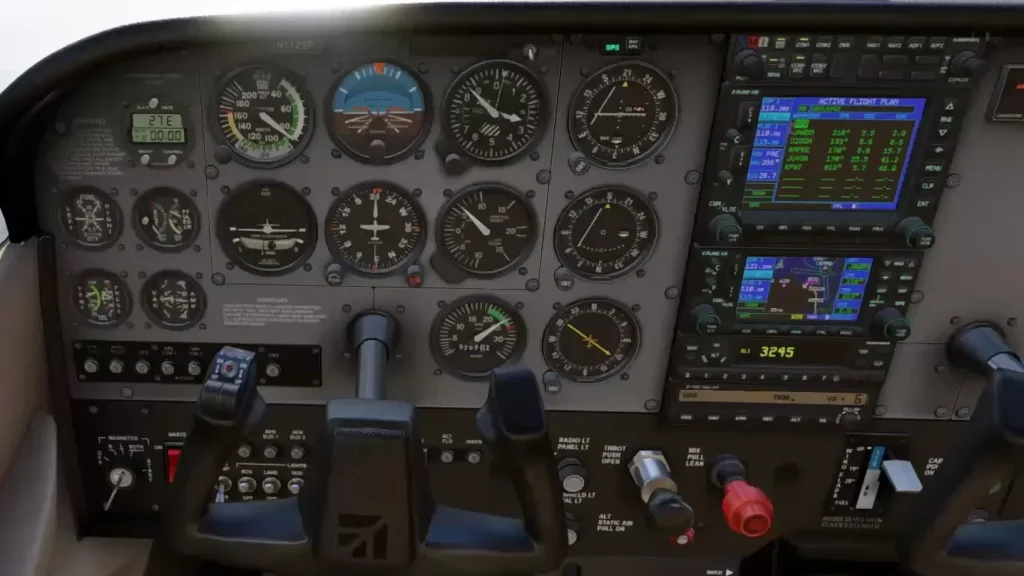
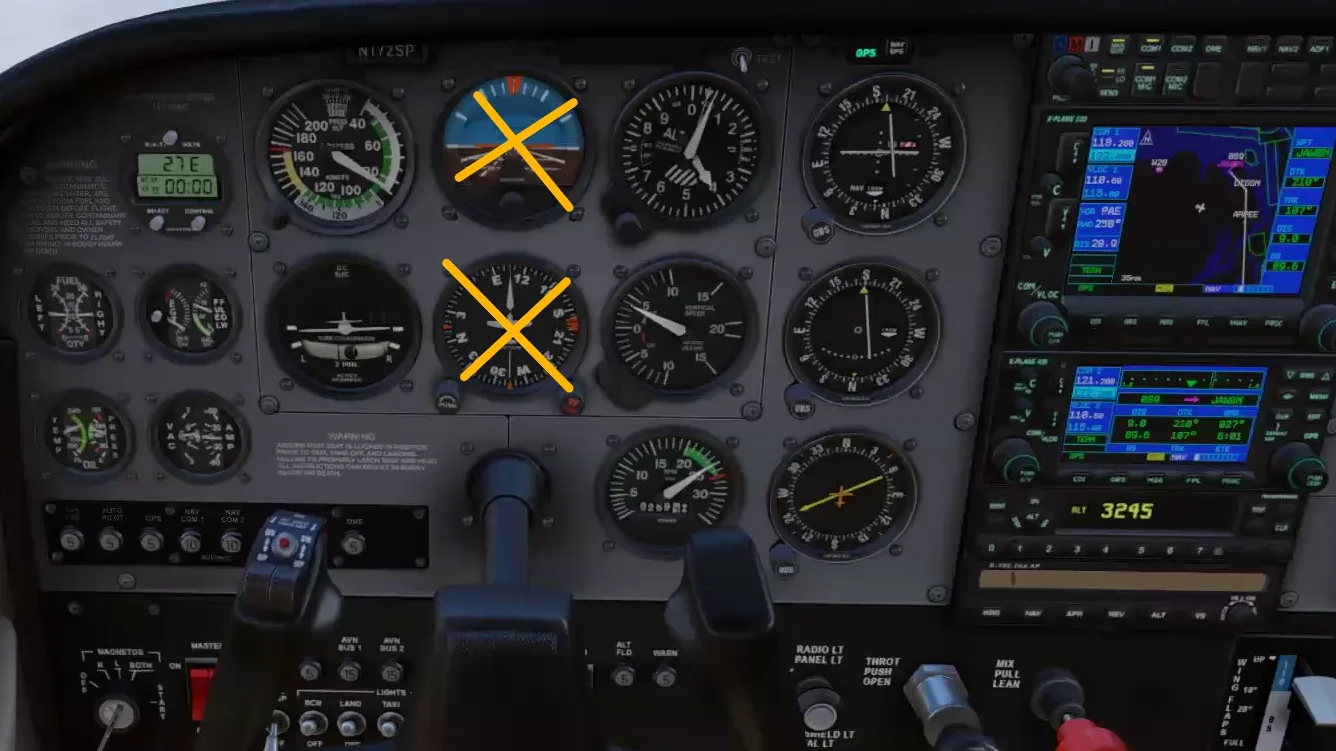
Ray is working toward his instrument rating. He flies a round-dial Cessna 172 in X-Plane 12 with a GNS 530 and 430 stack. He sent a written list of questions ahead of the session, most of them about the decisions that surround an instrument approach. Those are the parts of IFR flying that are hard to find in a textbook and easy to fumble when a controller puts you on the spot.
His instructor for the session was Alan Edwards (CFI, CFII, MEI), who has several decades of general aviation and instructing experience. The plan was to talk through Ray’s questions first, then fly a simulated approach that would tie the ideas together.
What to do when the approach does not work out
Ray’s first question: what do you actually do if you have to fly a missed approach for real? The flying part is published on the plate. The harder part is what comes next, because nobody makes the decision for you.
Expect the controller to put the question back to you. When you go missed, you will likely hear “say intentions.” A lot of pilots freeze, because they haven’t thought about it beforehand.
If the weather at your destination was bad enough that a missed approach was a real possibility, you probably already had to file an alternate. However, nearer options are often better choices.
To help you avoid surprises, listen to what’s happening on the frequency. When you are inbound to a busy airport, there is a good chance someone is on the approach just ahead of you. If you are listening on early, you may hear that the aircraft ahead went missed and diverted to a nearby airport that is getting people in. That is information you can use.
Ray’s next question: if he tells the controller he wants to divert to a nearby field, does he have to specify which approach and runway?
Alan suggested: Follow the lead of the traffic ahead. If other aircraft are getting in on a particular approach, take whatever is working. You request the airport, and you work the approach out with the controller from there.
When you divert, you need a fresh clearance limit. Sure, flying the published missed approach keeps you on your original clearance. But that clearance only took you to your destination; once you are established in the missed-approach hold and want to go somewhere else, you request an amended clearance to the new field.
The controller will issue it, typically something like “cleared to [the alternate] via radar vectors, maintain [an altitude], expect vectors [to a specific approach].”
The full report continues in FSC Pro
Members get every session report — real lessons from real 1:1 coaching sessions — plus the full FSC Pro library.
Already a member? Continue reading in the portal →
Based on a real Flight Sim Coach coaching session, used with the client's consent. The client's name has been changed.


